
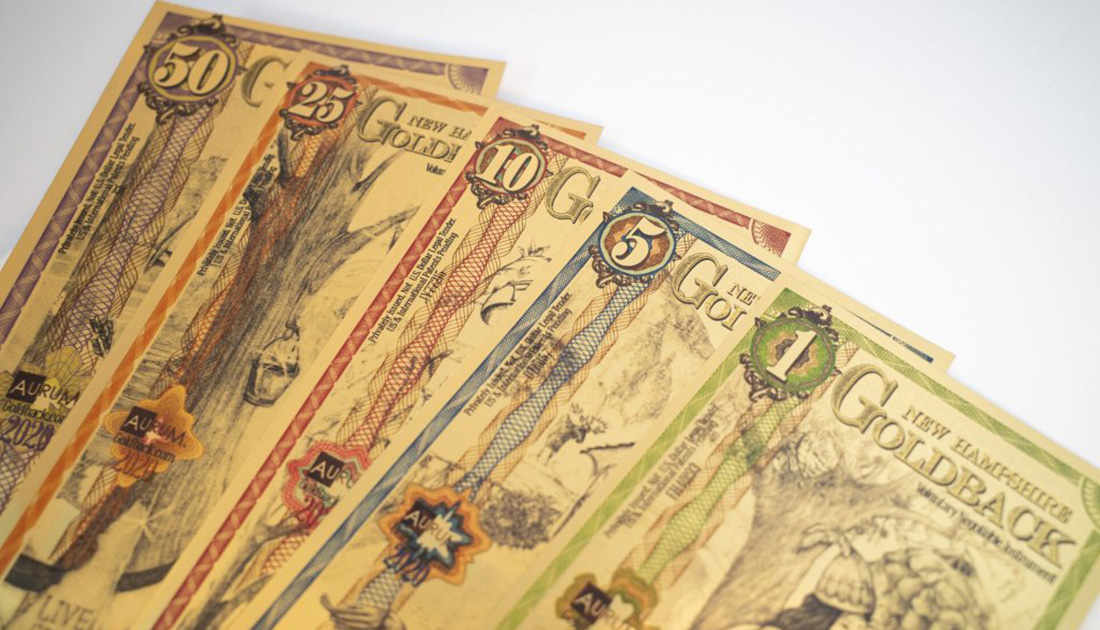
Revitalizing Gold as Everyday Currency
The Goldback represents a modern innovation in currency, combining the intrinsic value of gold with practical usability. Introduced in 2019, Goldbacks are designed to facilitate everyday transactions using physical gold in a spendable form.
Origins and Conceptualization
The concept of the Goldback emerged from a vision to make gold a practical medium of exchange in daily life. Traditional gold coins and bars, while valuable, are often impractical for everyday transactions due to their size and value. The idea was to create a currency that contained small, fractional amounts of gold, making it accessible and usable for routine purchases.
Development and Production
In 2019, the first Goldbacks were produced for Utah, inspired by the state’s 2011 Legal Tender Act, which recognized gold and silver as legal tender. The production process involves fusing a thin layer of 24-karat gold between two layers of durable polymer, resulting in a flexible, durable, and beautiful note. Each denomination contains a specific amount of gold, with higher denominations containing proportionally more gold.
Expansion to Other States
Following the success of the Utah Goldback, the concept expanded to other states:
- Nevada (2020): Introduced designs reflecting Nevada’s unique heritage.
- New Hampshire (2021): Featured imagery celebrating the state’s history and culture.
- Wyoming (2022): Showcased themes central to Wyoming’s identity.
- South Dakota (2023): Highlighted the state’s cultural and historical significance.
- Florida (2025): Launched with designs representing Florida’s diverse culture and landmarks.
Design and Denominations
Each Goldback series features intricate artwork that embodies virtues and elements significant to the respective state. The denominations are designed to be proportional to their gold content, allowing for practical use in transactions.
Legal Considerations and Adoption
While not recognized as legal tender by the federal government, Goldbacks are used in voluntary barter transactions in various states. Their acceptance varies, and it’s advisable to check with local businesses regarding their participation in the Goldback program.
Conclusion
The Goldback represents a fusion of art, history, and intrinsic value, offering a tangible connection to a precious legacy. As both a functional currency and a collectible, it provides a unique way to engage with gold in everyday life.For more detailed information on each state’s Goldback series and to view the intricate designs, you can visit the official Goldback website.